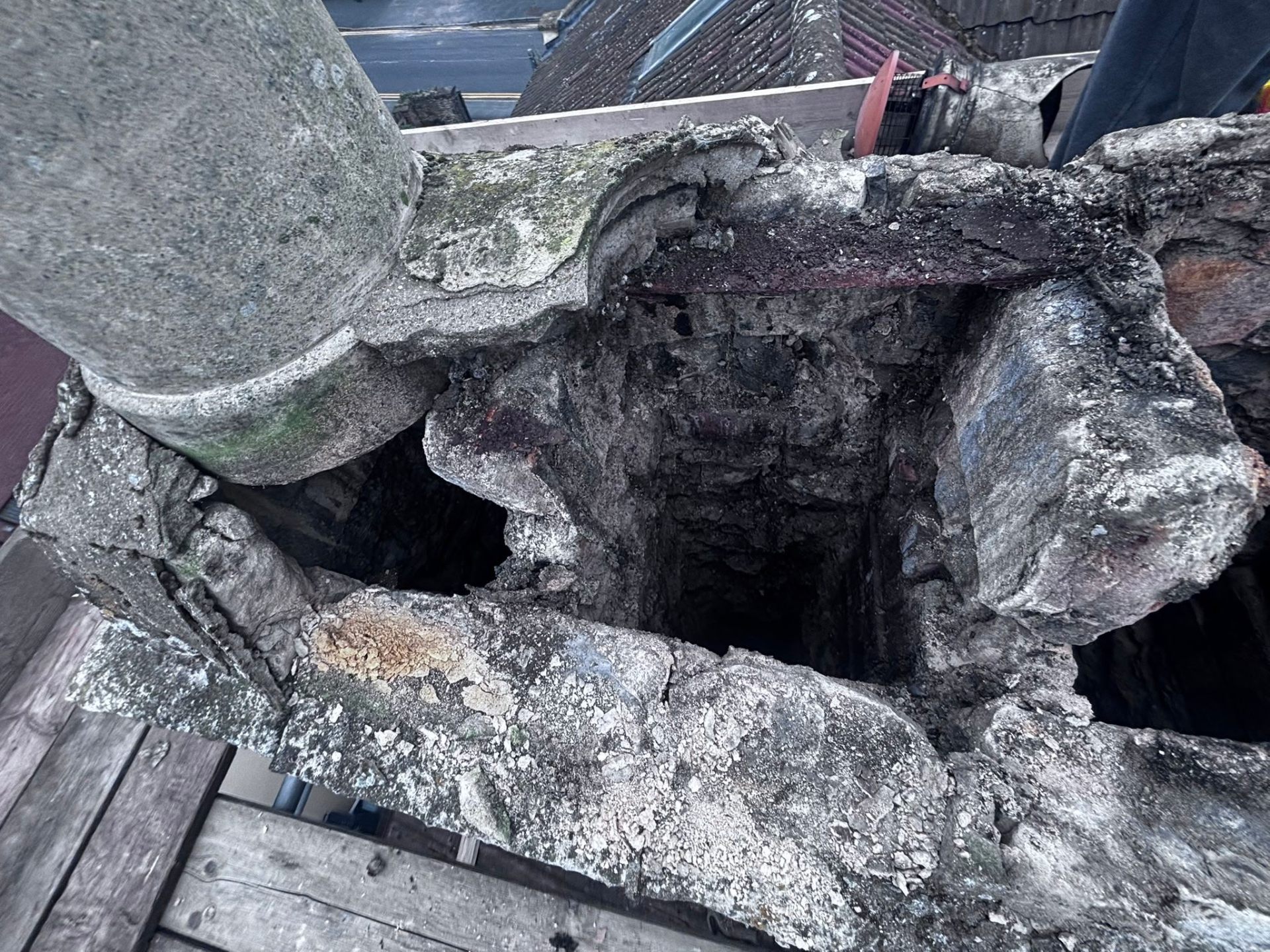
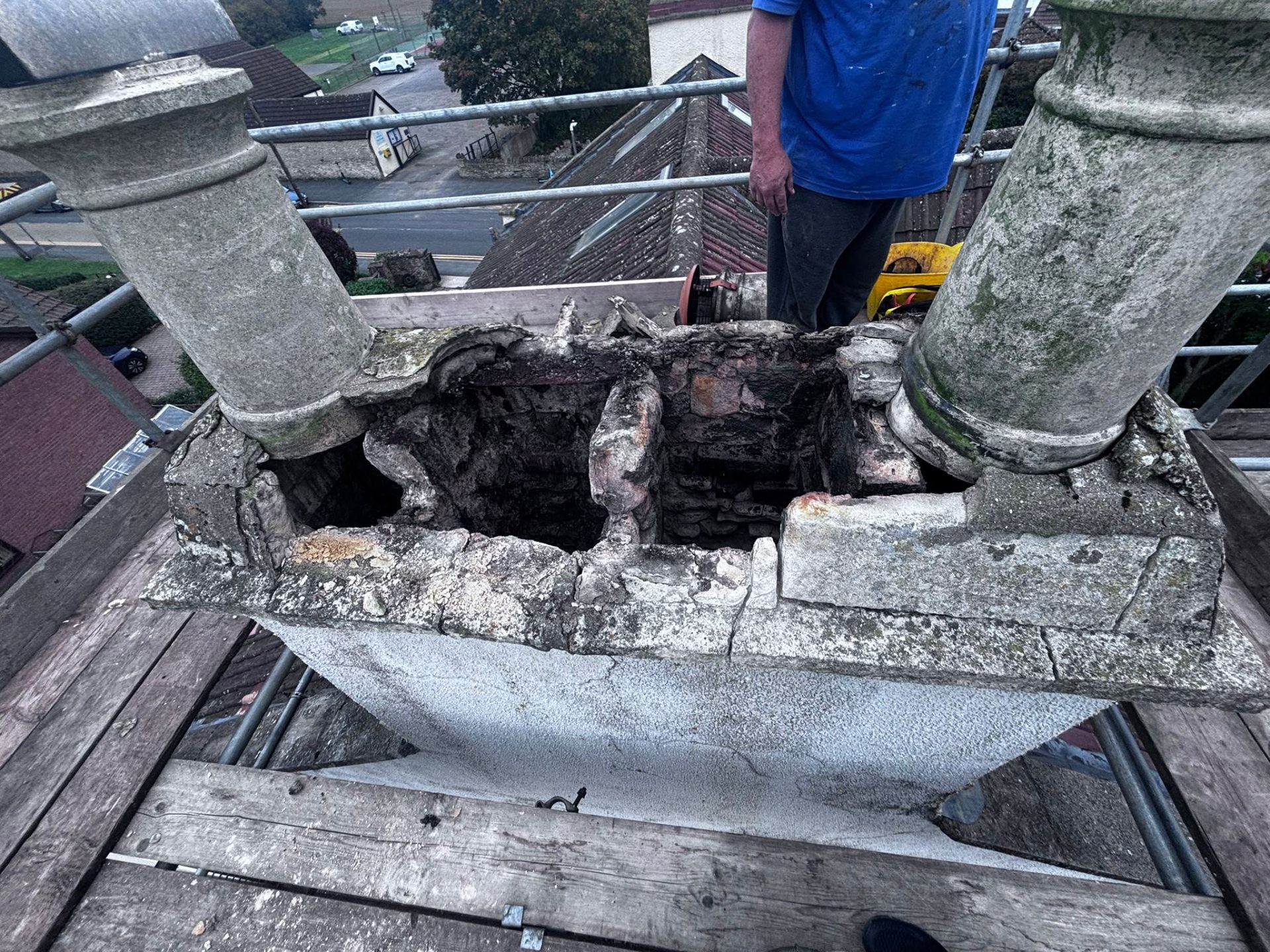
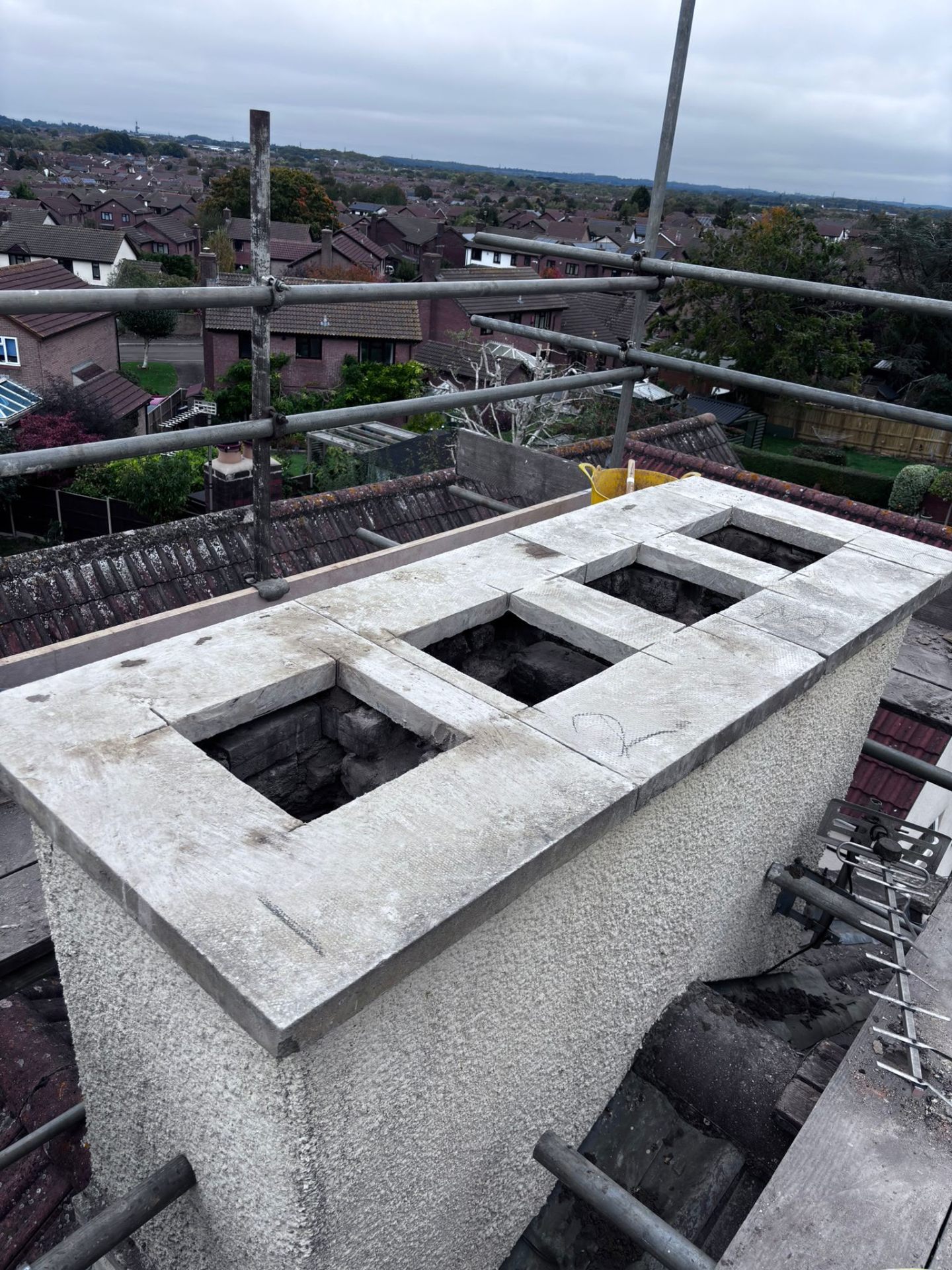
Chimney repairs in Chippenham by BC Roofing and Building

Chimney work · Chippenham

Chimney Repairs in Chippenham

BC Roofing & Building carries out chimney repointing, stack repairs, lead flashing work and chimney rebuilds across Chippenham and nearby Wiltshire. We investigate leaks, loose brickwork and storm damage before recommending the right repair.

  • Local Chippenham roofing company
  • Chimney repointing and repairs
  • Chimney flashing and leadwork
  • Chimney stack rebuilds
  • Serving Chippenham and nearby Wiltshire areas
Local chimney specialists

Chimney Repairs in Chippenham

Practical help for exposed masonry, weatherproof junctions and damaged stacks.

BC Roofing & Building repairs chimney stacks across Chippenham and surrounding Wiltshire areas. Work can include repointing, individual brick replacement, stack maintenance, lead flashing repair, storm damage work and partial or full rebuilding where required.

Because water can travel along roof timbers and masonry, a damp patch near the chimney does not always reveal the entry point. We look at the stack, mortar, leadwork, pots, caps and surrounding roof covering before discussing a solution.

Who repairs chimneys in Chippenham?

BC Roofing & Building provides chimney repairs in Chippenham and nearby Wiltshire areas. Services include chimney repointing, chimney stack repairs, lead flashing repairs, storm damage repairs and chimney rebuilds for damaged or deteriorating stacks.

Why is my chimney leaking?

A leaking chimney can be caused by damaged lead flashing, cracked mortar joints, loose brickwork, weathered pointing, damaged chimney caps or problems with the surrounding roof covering. A professional inspection can help identify the source of the leak before repairs are recommended.

Can a damaged chimney be repaired without rebuilding it?

In some cases, localised chimney damage can be repaired through repointing, replacing damaged bricks or repairing lead flashing. More extensive deterioration may require a partial or full chimney stack rebuild after inspection.

What can go wrong

Common Chimney Problems We Repair

Chimneys sit above the roofline and face rain, frost, wind and temperature changes from every direction.

Cracked mortar

Open joints can admit moisture and continue to weather around otherwise sound bricks.

Missing mortar

Deep or empty joints reduce support between bricks and are a clear sign the pointing needs assessment.

Loose bricks

Movement may affect one brick or a larger part of the stack; the extent must be checked safely.

Spalling bricks

Faces that flake or break away can indicate masonry damaged by repeated wetting and frost.

Damaged flashing

Split, lifted or poorly joined leadwork can let rain enter at the chimney and roof junction.

Chimney leaks

Damp may come from pointing, masonry, flashing, pots, caps or nearby roof tiles.

Storm damage

Wind and driving rain can disturb pots, flashing, bricks and already weakened mortar.

Leaning stack

A stack that appears out of line needs prompt inspection for possible movement.

Damaged chimney pots

A cracked, loose or displaced pot should be assessed along with its bedding and the stack below.

Failing caps

A damaged cap or terminal may allow weather into an opening or become insecure.

Damp chimney breast

Indoor staining near a chimney can have several causes, so the external junction needs tracing.

Noticed loose mortar, damp or storm damage?

Describe what you can see and arrange a safe chimney assessment.

Get Your Chimney Checked
Chimney repointing assessment in Chippenham
Renewing weathered joints

Chimney Repointing

Chimney repointing involves removing loose or deteriorated mortar from the joints between bricks and renewing it with suitable mortar. Sound joints help the stack shed weather and keep individual bricks properly bedded.

Mortar gradually deteriorates because the stack is repeatedly exposed to rain, frost, sunlight and movement. Signs include shallow joints, cracks, gaps and loose fragments.

When repointing may be enough

Repointing may be appropriate where deterioration is mainly within the joints and the bricks remain sound, aligned and secure. Loose bricks, deep structural cracks or widespread spalling need a broader assessment.

Why chimney damage should not be ignored

Open joints retain water and expose more masonry to the weather. Early investigation can clarify whether maintenance is still localised or whether damaged bricks also need replacement.

Chimney Stack Repairs

Stack work can involve replacing damaged bricks, renewing mortar, securing localised masonry and repairing storm-affected sections. The surrounding roof and upper stack are checked together because a visible defect may be part of a wider weathering pattern.

Loose Chimney Bricks

Loose bricks can become less secure as mortar erodes. They should be assessed from safe access, not tested from the roof by a homeowner.

Chimney Lead Flashing Repairs

Lead flashing forms a weather-resistant junction between the chimney stack and surrounding roof covering. Split flashing, loose edges, failed joints or weathered leadwork can allow water to penetrate this vulnerable change of surface.

Why flashing problems can cause leaks

Rain running down the stack must be directed onto the roof covering. A gap in the flashing detail can let water track beneath tiles, making the internal damp appear away from the actual defect.

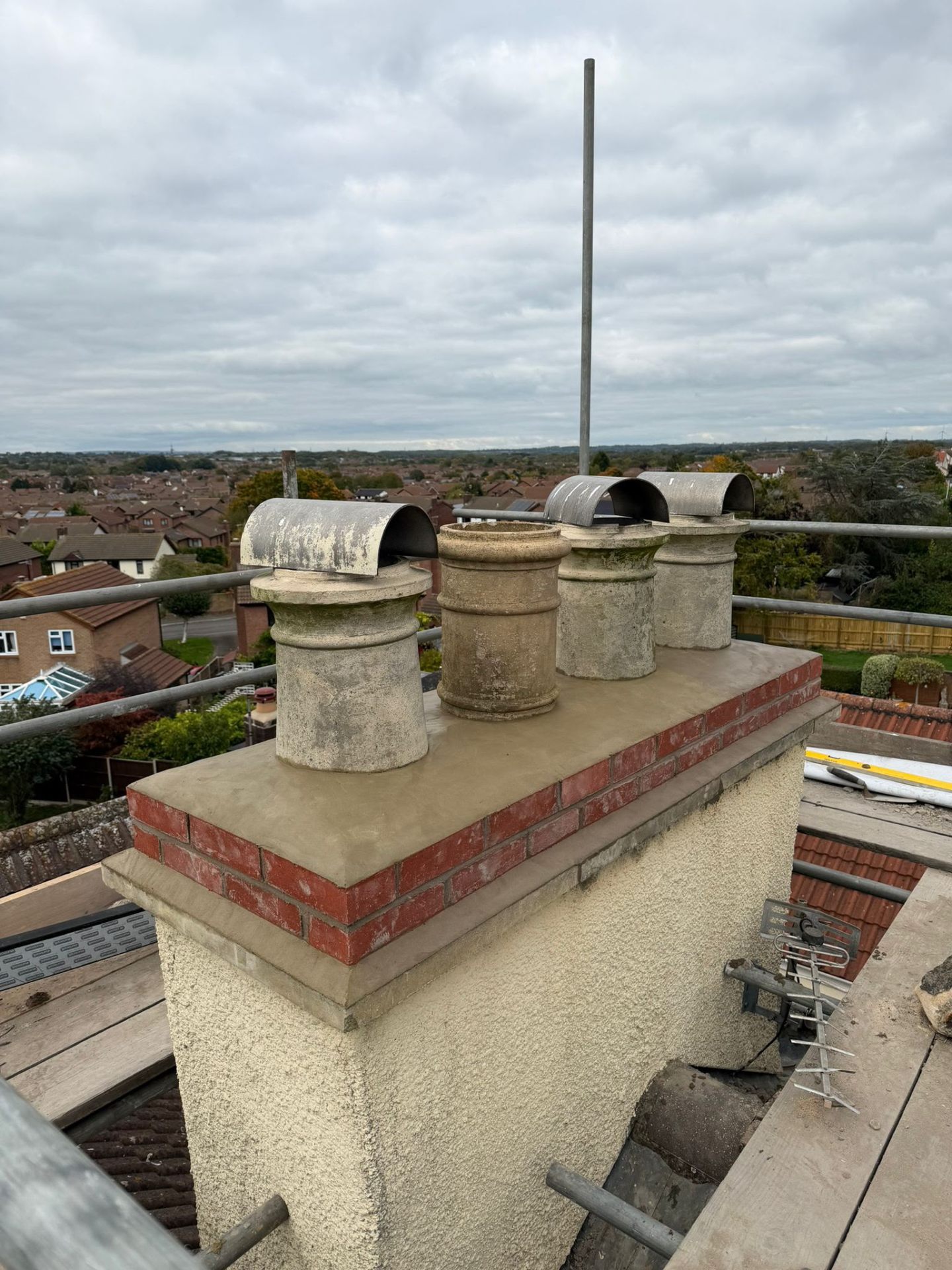
Completed chimney rebuild by BC Roofing and Building
When local work is not enough

Chimney Rebuilds and Structural Repairs

More extensive work may be needed where mortar deterioration is severe, many bricks are damaged, sections have moved, storms have displaced masonry or earlier local repairs have repeatedly failed.

Partial Chimney Rebuilds

A partial rebuild can remove and reconstruct the unsound upper courses while retaining a stable lower stack. This may be considered when deterioration is concentrated near the top.

Full Chimney Stack Rebuilds

A full rebuild may be considered where deterioration or movement affects the stack throughout and isolated repairs would not address its condition.

When a chimney rebuild may be considered

Any rebuild recommendation should follow inspection. The extent of masonry damage, alignment, exposure, flashings, pots and the roof junction all help determine whether repair, partial rebuilding or full rebuilding is appropriate.

Tracing water ingress

Why Is My Chimney Leaking?

The damp patch is evidence of a problem, but not always evidence of its exact location.

Masonry and pointing

Cracked joints, porous or spalled bricks and gaps around the top of the stack can admit wind-driven rain.

Flashing and roof junctions

Split leadwork, failed joints or damaged tiles beside the chimney can let water pass beneath the covering.

Pots, caps and terminals

A damaged pot, cap or surrounding flaunching can leave the top of the stack more exposed to weather.

Chimney leaks can sometimes be mistaken for general roof leaks because water follows rafters, underlay or masonry before appearing indoors. Inspecting the chimney and nearby roof covering together helps avoid treating the wrong area.

A practical starting point

Chimney Problem Diagnosis Guide

These common patterns help frame an inspection; they are not a diagnosis from ground level.

Damp around chimney breast

Possible cause
Flashing or pointing issue
Typical next step
Inspect chimney and roof junction

Loose mortar

Possible cause
Weathered pointing
Typical next step
Assess for repointing

Loose or damaged bricks

Possible cause
Masonry deterioration
Typical next step
Assess brick repair or rebuild

Leak after heavy rain

Possible cause
Flashing or masonry issue
Typical next step
Investigate source of water ingress

Visible leaning

Possible cause
Possible structural movement
Typical next step
Arrange professional inspection

Storm damage

Possible cause
Damaged brickwork, flashing or pot
Typical next step
Inspect affected chimney areas

Cracked leadwork

Possible cause
Ageing or damaged flashing
Typical next step
Assess lead flashing repair
Ground-level warning signs

Signs Your Chimney Needs Attention

Do not climb onto the roof. Note what you can see safely and arrange an inspection where needed.

Crumbling mortar

Granular mortar or fragments below the stack may show that exposed joints are breaking down.

Loose bricks

A shifted brick or widening joint should be checked rather than pressed back from roof level.

Missing mortar joints

Visible gaps can hold water and weaken the bond between neighbouring bricks.

Water stains

Staining on ceilings or walls can indicate water tracking from the chimney junction.

Damp chimney breast

Damp after rain may relate to flashing, pointing, masonry or a cap issue.

Damaged lead flashing

Lifted edges, cracks or gaps around the stack can interrupt the weatherproof junction.

Leaning chimney stack

A noticeable change in alignment warrants a prompt professional inspection.

Cracked bricks

Cracks or missing faces expose more of the masonry to weather.

Loose chimney pots

Movement at the top of a stack can involve the pot, its flaunching or nearby masonry.

Debris after storms

Brick, mortar or pot fragments around the property may point to storm-related chimney damage.

Deciding what to do next

Chimney Repair Priority Matrix

Simple, non-alarmist guidance for common visible chimney issues.

Cracked mortar

What you may notice
Fine cracks or open joints
Possible risk
Further weathering
Recommended next step
Arrange inspection

Loose brick

What you may notice
Movement or a widening joint
Possible risk
Falling material or wider instability
Recommended next step
Prompt inspection

Leaking flashing

What you may notice
Damp after rain or lifted leadwork
Possible risk
Continuing water ingress
Recommended next step
Repair recommended

Damp around chimney

What you may notice
Staining on walls or ceilings
Possible risk
Hidden moisture damage
Recommended next step
Arrange inspection

Storm damage

What you may notice
Fresh debris or displaced parts
Possible risk
Damage may worsen in more weather
Recommended next step
Prompt inspection

Leaning stack

What you may notice
The stack looks out of line
Possible risk
Possible structural movement
Recommended next step
Prompt inspection

Damaged chimney pot

What you may notice
Cracks, movement or missing pieces
Possible risk
Water entry or loose material
Recommended next step
Arrange inspection

Multiple deteriorated bricks

What you may notice
Flaking faces across the stack
Possible risk
Progressive masonry loss
Recommended next step
Repair recommended
Repairing the right amount

Chimney Repair vs Chimney Rebuild

This is general guidance. Final recommendations depend on a close inspection of the complete stack and roof junction.

Local mortar damage

Repair may be suitable when
Joints are weathered in a limited area and bricks remain sound.
Rebuild may be considered when
Mortar failure is deep or widespread across the stack.

One or two damaged bricks

Repair may be suitable when
Affected bricks can be removed without disturbing a larger unstable area.
Rebuild may be considered when
Damage continues through several courses or faces.

Flashing leak

Repair may be suitable when
Leadwork is the clear entry point and the stack remains sound.
Rebuild may be considered when
The junction failure is combined with major masonry deterioration.

Widespread brick deterioration

Repair may be suitable when
Only isolated brick faces need replacement.
Rebuild may be considered when
Many bricks are spalled, cracked or no longer secure.

Structural movement

Repair may be suitable when
Inspection finds no continuing movement and repair is locally suitable.
Rebuild may be considered when
Sections are leaning, displaced or cannot be stabilised with local work.

Repeated repairs

Repair may be suitable when
A previous patch missed one identifiable defect.
Rebuild may be considered when
Repairs keep failing because the underlying stack has deteriorated widely.

Storm damage

Repair may be suitable when
Damage is limited to a pot, flashing detail, joint or brick.
Rebuild may be considered when
Several courses or an unstable section have been displaced.

Older deteriorating stack

Repair may be suitable when
The masonry is generally sound with limited defects.
Rebuild may be considered when
Weathering affects the stack throughout and local repairs would be insufficient.
Ask About Your Chimney Repair
Areas covered

Local Chimney Repairs Across Wiltshire

BC Roofing & Building provides chimney repairs in Chippenham and nearby Wiltshire areas.

We help property owners in Chippenham, Calne, Corsham, Melksham, Lacock, Trowbridge and Devizes, with wider roofing work across Bath, Swindon, Bristol, Avon and Gloucestershire. Tell us your location and what you have noticed so we can discuss whether the enquiry is within our service area.

Areas We Cover
  • Chippenham
  • Wiltshire
  • Calne
  • Corsham
  • Melksham
  • Lacock
  • Trowbridge
  • Devizes
  • Bath
  • Swindon
  • Bristol
  • Avon
  • Gloucestershire
Genuine trust signals

Why Local Customers Choose BC Roofing & Building

Straightforward chimney advice supported by visible project work and established contact details.

Local roofing company based in Chippenham

Real chimney repair and rebuild photographs

City & Guilds qualified

£1M public liability insurance shown on the website

Clear quote process before work begins

MyBuilder reviews profile linked for independent feedback

Frequently asked questions

Chimney Repairs FAQs

Clear answers about chimney leaks, repointing, leadwork and rebuilding.

Do you repair chimneys in Chippenham?

Yes. BC Roofing & Building carries out chimney repairs in Chippenham and nearby Wiltshire areas, including repointing, brick repairs, flashing repairs and rebuild work where inspection shows it is needed.

What are the signs that a chimney needs repairing?

Common signs include crumbling or missing mortar, cracked or loose bricks, damaged lead flashing, damp near the chimney breast, a displaced pot, storm debris or a stack that appears to lean.

What causes chimney mortar to crumble?

Chimney mortar is highly exposed to rain, frost, wind and temperature changes. Repeated wetting and drying can gradually erode joints, while trapped moisture can worsen frost damage.

Can a leaking chimney be repaired?

Often, yes. The repair depends on whether water is entering through failed pointing, damaged masonry, lead flashing, a pot or cap, or nearby roof tiles. The source should be identified before work is chosen.

Do you repair chimney lead flashing?

Yes. We can assess split, loose, weathered or failed lead flashing around a chimney and repair or renew the affected detail where appropriate.

When does a chimney need repointing?

Repointing may be suitable when mortar joints have weathered or fallen away but the bricks and overall stack remain sound. Deep gaps, loose sections or damaged bricks may require more than repointing.

Can damaged chimney bricks be replaced?

Individual damaged bricks can often be replaced if deterioration is localised and the surrounding masonry is stable. Widespread damage may make a partial rebuild more practical.

When might a chimney stack need rebuilding?

A partial or full rebuild may be considered where brick or mortar deterioration is extensive, sections have moved, storm damage is severe, or repeated local repairs have not addressed the underlying condition.

Can storms damage chimney stacks?

Yes. High winds and driving rain can disturb pots, flashing, loose bricks and weakened mortar. Fresh debris or visible movement after a storm should be inspected from a safe position.

Can I request a chimney repair quote?

Yes. Use the enquiry form or call +44 7570 016 676. Share what you have noticed, when it occurs and the property location so BC Roofing & Building can discuss the next step.

Tell us what you have noticed

Request a Chimney Repair Quote

Not sure what is causing the chimney problem? Send us a few details and BC Roofing & Building can discuss the issue and advise on the next step.